Making Assumptions

Photo by adanvdo on Pexels.com

Last week in one of my online ESL classes we read an essay together on bluegrass music. As I do with most essays, I shared some interesting photos and a fun short video before we read in order to grab the students’ attention and make them more eager to read aloud with me.

For this topic, I chose a video of Bill Monroe, the father of bluegrass music, performing his famous song “Uncle Pen”. While I absolutely love his music, I wasn’t sure how my students would respond. When I was growing up, many people looked down on country and bluegrass music. Since they live very far away, I expected my students to find the music very strange and likely do the same.

I was so wrong! While the video was playing, they were absolutely mesmerized. One girl even had to stand up and dance. (It is a difficult song to listen to and stay still.) After the song ends, I always give my students time to share their thoughts, opinions, and questions.

When I gave them this opportunity, every one of them absolutely loved the song. One student, a budding violinist, pondered whether he had played something similar. The young lady who was dancing had to hum part of the tune aloud and dance some more. Even the co-host had to chime in with a message in the chat box about what beautiful music it was.

We went on to read the essay, and I finished the class by asking them if they were to come visit me here in Florida, would they want to attend a bluegrass festival. The answer was a resounding yes.

These students live in Singapore and China, miles and miles away from me in Florida. I was very pleasantly surprised at how much they loved the music. And reminded once again not to make assumptions about other people. 🙂

Finally, in case you’re interested, you can check out the video we watch below:

No Excuses

Recently I had a student who was diagnosed with terminal cancer in the third week of class. I was heartbroken for them. I pondered what I would do in that situation and imagined I would quit school and focus on my illness and family.

But this student did not quit. They decided that if they had four years, they were going to get their degree in three years. Giving up was not an option for them.

The doctors recommended starting treatment immediately. The chemotherapy made this student so sick they were hospitalized. I called and texted but didn’t hear from them for a couple of weeks. I was afraid they had gotten worse.

Finally, after two weeks I saw the student’s name on my caller ID, and eagerly answered. Their hands and feet had swollen from the chemotherapy, making it impossible for them to type.

So, what did this amazing student do? They put a pen in their mouth and used it as a stylus to tap the keys on their phone and laptop.

I was (for probably the first time in my life) dumbstruck. And ashamed of the times I’d given up too easily because I had a mild headache or was tired. I decided I would never do that again. That whenever I felt like quitting, I’d remember this student and keep on moving forward. If they could keep going with a terminal diagnosis and horrible side effects from the treatment, there would be no excuses for me.

Best of all, this student successfully completed the class and is continuing to pursue their degree. It was an honor and privilege to be their professor.

New Workspace Who Dis?

Yesterday we had our roof replaced, so we stayed overnight in a nearby rental. At first it was fun being somewhere new. But as the day went on and I tried to work, it quickly became frustrating.

While I’d brought my laptop, charger, tablet, and even my lap desk with me, nothing felt right. The only workspace was in my daughter’s room, and she needed to complete her own homework before going to her job.

This left the dining room table, which was glass, small, and square. Cute for a romantic meal for two, but not too comfortable for typing on a laptop. My elbows were the wrong height, and I was worried about scratching the glass.

This left the couch or bed. The couch was comfortable but had no ottoman, so I ended up sitting with my computer on my lap and my feet flat on the floor. That just didn’t feel right, either.

So, I ended up on the bed with my computer on my lap desk. That worked fairly well, but there was no TV, so I couldn’t have my usual background noise. I pulled up my favorite game show channel on my tablet, but then couldn’t figure out where to put it. If I put it on the dresser, it was too far away to see. If I put it beside me on my husband’s pillows, I had to turn my head at a ninety-degree angle anytime I wanted to see something.

I ended up putting it on the bed beside me, using the built-in kickstand. That worked well, but I was afraid if one of our fur babies jumped on the bed, they might knock it off or scratch it.

As a result of all of this, I did a couple of tasks that were absolutely essential then gave up.

So why post about all of this? As a reminder of how important it is for both teachers and students to have a good workspace. My house is small, and I don’t have an extra bedroom I can use as an office, but I do quite well with a closet, a lap desk, and my trusty laptop. My bed is cozy and my TV is in just the right spot for background noise. My lap desk supports my wrists well and eliminates neck strain from hunching over.

When I teach a live class on Zoom, I move my incredibly supportive office chair from the desk in our dining room back to the bedroom and position it in front of the closet. Since my closet has become my mini office, I have bookshelves inside which makes a great background. I can then place my laptop on a lap desk which rests on the foot of my bed. I end up with a video that looks professional yet inviting for my students but is ergonomically correct for myself.

I didn’t get all of this figured out overnight; it’s been a process. So why spend so much time on it? So I can focus on my work and give my students my absolute best. And, even better, I can remind them of how important it is for them to have their own workspace and even help them figure out what will work best for them.

Nuts about Notebooks! :)

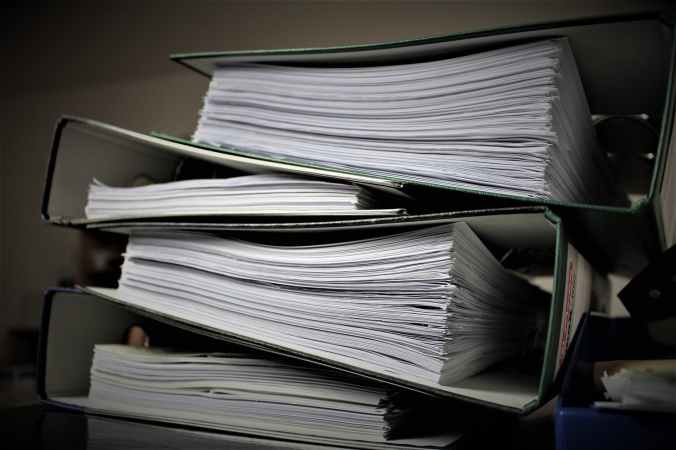
Whenever I begin a new project or start a new job, I always create an actual physical notebook. I print out all the emails, paperwork, presentations, and meeting notes. I then punch holes in them and put them in a nice binder.

The binder is divided with colored transparent plastic dividers, each labeled with a particular category such as E-mails or Meeting Notes. I then put a label down the spine of the binder, so I know exactly which project or job it is for.

So, in the world of the cloud, why do I still do this? Because I am a kinesthetic learner. I have found I learn best if I can hold printed materials in my hand. I like writing on them and highlighting important ideas. I know I can do that on my tablet or laptop, but it’s not as much fun as doing it all by hand.

By the time I have everything printed out, organized, read, and highlighted, I have a good handle on the project’s or job’s requirements. In addition, I’ve burnt up some of the nervous energy I always feel when I start something new and can now focus on the work I need to do instead of my anxiety.

Are you a notebook person? If not, how do you get organized for a new job or project? What helps you deal with that initial burst of anxiety that frequently accompanies a new project or job?

Change is inevitable

In July we received the sad news that Independence University was closing. Working at Independence was a lovely experience – phenomenal supervisors and amazing colleagues made the job a true pleasure.

Now it’s time to send out the resumes and look for a new position. Updating my resume has been an eye-opening experience. I don’t always take the time to look at just what I’ve accomplished in my career.

It also reminds me of the many wonderful colleagues and students I’ve worked with.

While I’m sad at leaving, I’ve also realized how each new position has been a wonderful opportunity to grow my skills set and meet people from so many different walks of life.

I am continually inspired by both my colleagues and students; seing them overcome challenges that would floor most of us reminds me that my future positions will allow me to both learn new skills but also to meet many new and exciting people. I can’t wait to get started!

FCAT: I like it! I really like it!

One Room Schoolhoue - Franklin County, Kansas

Two weeks until FCAT testing begins.

I’ve always been a free spirit.  While I saw tests as puzzles to challenge my brain, I knew that many others disliked testing to the point of phobia.  Naturally,  I was constitutionally opposed to FCAT testing.  Yet when my team leader gave me the administrator’s handbook, I was enthralled.  I sat and read it cover to cover, like a bestseller.

Although I’ve proctored the SAT and other standardized tests, this will be my first time proctoring the FCAT.  I wasn’t looking forward to it.  But after reading the manual, I found, to my surprise, that I was quite intrigued, even turned on, by all the testing procedures, task lists, security measures, and scripts.  My creative brain admired the neatness, the organization, and the lack of surprises.  Every eventuality seemed to be provided for.

I like the quiet during standardized testing.  That’s the only time I get to hear the “sound of silence”, with apologies to Simon and Garfunkel.  I like the freshly sharpened pencils, sealed test books, and bubbled in answer sheets.  My view of composition and language arts are never this straightforward and easily categorized.  But I have found during my career that I like test results – they show me if I’m doing my job.  I love being able to quantify the learning I see happening with solid physical data.

I’ve also read up on some of the question design – what is required for writing questions for each standard.  When I’m not actually teaching in public schools I wouldn’t mind giving test writing a try.  You just know the editors of the testing materials sit around a table arguing over every word, punctuation mark, font, etc.  I like the detail that goes into creating standardized test materials.

Of course, I won’t be able to read a single word of the FCAT tests.  Teachers aren’t allowed to do so.  But I’ll definitely enjoy the reports for the county schools when they are released.  For an English major with major math anxiety, I can really get into those statistics.

Introduction

Louise C. Leonard, The Redheaded Professor

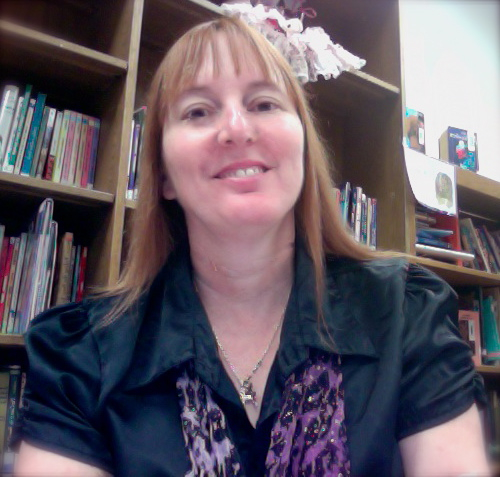
Welcome to my blog.  I’m Louise C. Leonard, aka the Redheaded Professor.  I’ll be writing about teaching English Composition, Developmental Reading, Basic English and Literature at the college level.

I love using instructional technology in my classroom.  I’m also constantly looking for new pedagogies to best meet the need of my students.  Best of all, however, I love being a part of my students’ journeys.  It’s an honor and a privilege to be a part of that.