Happy Lazy Labor Day!

Photo by Pixabay on Pexels.com

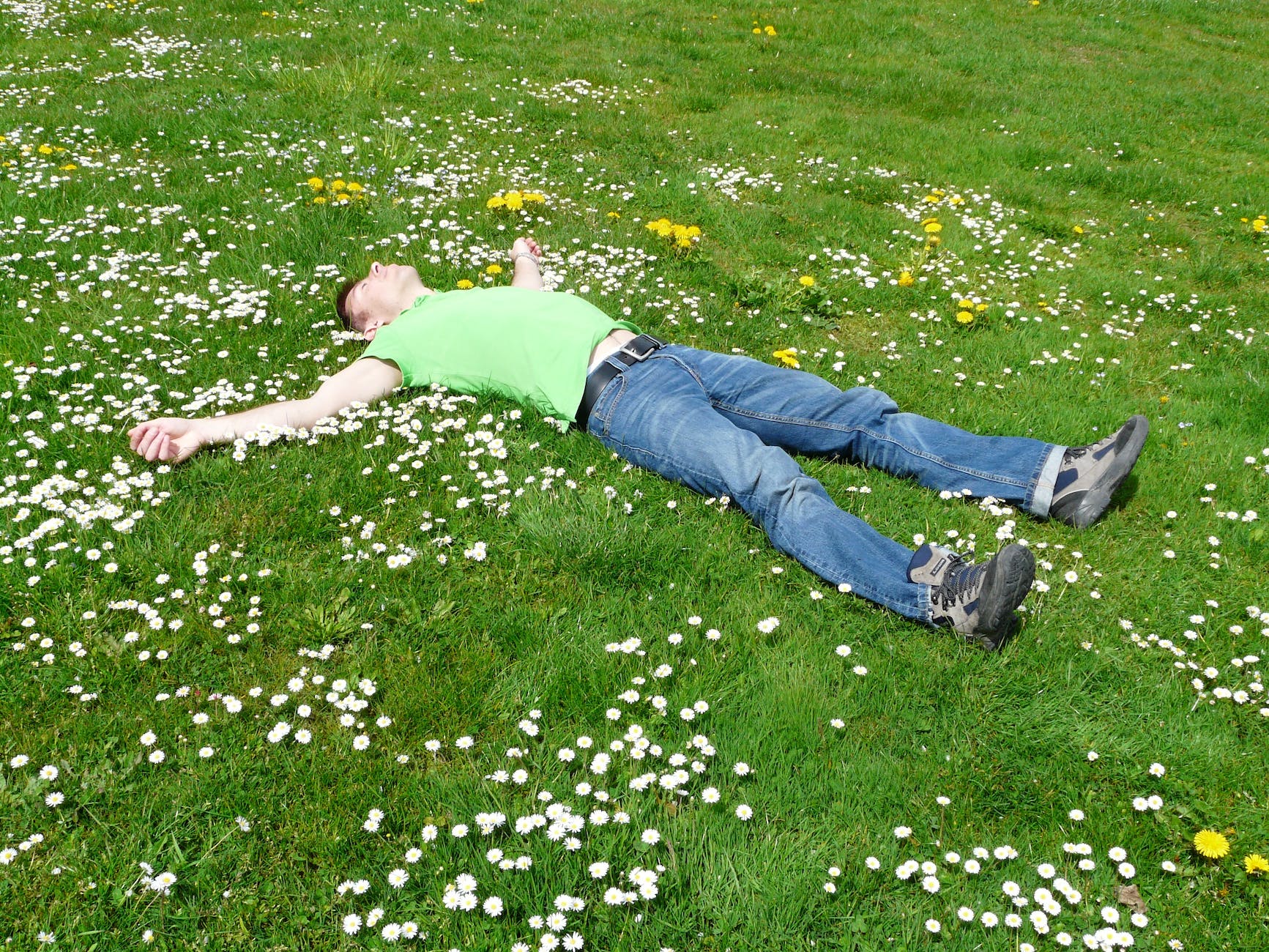
Today is Labor Day, and both my husband and daughter are working. It seems weird being the only one with the day off.

I did sleep in, but once breakfast and my devotional time was over, I did have to send out an invoice. But afterwards I decided not to do any work today. I just didn’t realize how difficult that would be.

First, I had to check my work email. I started to respond to one, then remembered, “Oh yes, it’s Labor Day. I’m not working today. This can wait until tomorrow.” Yet I found it incredibly difficult not to hit “reply” and type up my response.

Next, I checked the email I use for job applications. There weren’t any openings that interested me, so I was able to restrain myself from checking the various job boards.

Usually, I would be online all morning, answering emails, grading homework, and planning for my next class session. But yesterday I woke up with a scratchy throat and decided I’d better take advantage of the time off to rest, rejuvenate and restore my health.

So, what did I do after church yesterday? I went to two groceries to pick up a rotisserie chicken and some lemons. I did get a quick nap after, but still cooked supper.

Why is it so hard for us to stop working? We are not our jobs. We are so much more than that. We deserve time off to recharge without feeling guilty.

So, if you’re, like me, feeling like you can’t take any time off, do it anyway. You have my permission! 🙂 Try hard not to do anything you “have” to do — no work-related emails, calls, or typing. See how you feel afterwards.

Let me know how it went for you in the comments section below. I’ll be here, forcing myself not to work, and cheering you on!

Making Assumptions

Photo by adanvdo on Pexels.com

Last week in one of my online ESL classes we read an essay together on bluegrass music. As I do with most essays, I shared some interesting photos and a fun short video before we read in order to grab the students’ attention and make them more eager to read aloud with me.

For this topic, I chose a video of Bill Monroe, the father of bluegrass music, performing his famous song “Uncle Pen”. While I absolutely love his music, I wasn’t sure how my students would respond. When I was growing up, many people looked down on country and bluegrass music. Since they live very far away, I expected my students to find the music very strange and likely do the same.

I was so wrong! While the video was playing, they were absolutely mesmerized. One girl even had to stand up and dance. (It is a difficult song to listen to and stay still.) After the song ends, I always give my students time to share their thoughts, opinions, and questions.

When I gave them this opportunity, every one of them absolutely loved the song. One student, a budding violinist, pondered whether he had played something similar. The young lady who was dancing had to hum part of the tune aloud and dance some more. Even the co-host had to chime in with a message in the chat box about what beautiful music it was.

We went on to read the essay, and I finished the class by asking them if they were to come visit me here in Florida, would they want to attend a bluegrass festival. The answer was a resounding yes.

These students live in Singapore and China, miles and miles away from me in Florida. I was very pleasantly surprised at how much they loved the music. And reminded once again not to make assumptions about other people. 🙂

Finally, in case you’re interested, you can check out the video we watch below:

Libraries – Who Needs Them?

Photo by Christina Morillo on Pexels.com

Every time I hear someone say we don’t need libraries anymore, my blood boils. I was a librarian for 20 years and absolutely loved my job. I know just how many services libraries, and librarians, provide.

As a college professor, I always find myself with my students in the library at least once a week. Our college’s librarian is wonderful at providing assistance, but with so many students and only one librarian, I never mind helping out. I love showing them how to use one of the library’s databases, search for the perfect article, or even use the copier.

Teaching online I didn’t expect to do as much library work, but I was very pleasantly surprised at the reality. Online classes have many students and many of them are hesitant to contact the college’s librarian. Of course, I always encourage them to make use of the many amazing services the wonderful college librarians provide. And I am always amazed at just how quickly the librarians respond to my emails or chat messages.

I love creating fun videos to show my students how to access the library’s databases and find the perfect sources for their research papers. And I never mind working one-on-one with them either, as we meet in the class zoom room and peruse the library’s databases together.

As a professor, I have access to my college’s databases and amazing librarians. But I still use my local public library for many things. I love checking out actual physical books as well as eBooks. But I also make use of their databases and online streaming services, as well as the reference services they still provide in person, online and even by phone.

Whenever I visit the public library, I’m always pleasantly surprised to see how busy it is. There are children listening intently to story hour, pages shelving, clerks checking items out, reference librarians answering questions, avid readers perusing the stacks, and countless people making use of the computer terminals to search for jobs, take courses, or conduct research.

So, the next time you hear someone say we don’t need libraries or librarians, remind them we all do.

A Different Perspective

I love walking my dog. We travel to different nearby parks and enjoy exploring them together. At the end of November, however, I was walking him and stepped in a hole. I went down like an axed redwood and ended up with a fractured right fibula.

So now I’m in a boot cast and using crutches. I work from home, so I didn’t think this would have much of an effect on my work life.

Was I wrong! I’ve managed to do my job to my usual exacting standards, but it definitely requires some accommodations. Just getting my lapdesk out of my office closet takes planning. I must get up, put on my boot, put on the one shoe I have that is the same height as my boot cast, get my crutches, work my way into that room, open my door, and then somehow manage to carry the lapdesk to my bed. No problem.

But then when I must teach, I need my lap desk, my headset, my camera, relevant textbooks, my notebook, my pen, and my USB extension plugin. Since I could only carry one of these items at the time, it took me much longer than normal to set up for my classes.

I did figure out I could use a tote bag for some items and carry more at the time. And my husband and daughter were eager to help whenever I asked. I just didn’t like asking them for help.

So what’s the point of this post? As teachers, we need to remember two things:

  1. Some students may require a bit more time for an assignment than others.

When an assignment is due, give students who are late a grace period if possible. Even better, talk to them and find out what is going on in their world. It can be difficult to get your assignments in when your little one is in the hospital, you’re working double shifts, or one of your elderly parents is ill.

Other students may have difficulty using the online LMS. When that happens, consider allowing students to email their work to you. You can then post it for them. I’ve also made short videos showing them just how to submit their work and texted the videos to them.

2. Students may be afraid to ask for help.

Rather than waiting for a student to ask you for help, when you notice they haven’t participated in your course for a few days, reach out to them. Call or text them to let them know you’re concerned.

My students respond well to texts that say something like “How’s it going?” or “Is everything okay?” When you keep it simple, they feel less attacked and are more likely to talk with you and let you know why they haven’t submitted their work.

Building relationships, especially in online courses, brings a human element to your class and makes your students much more likely to be successful.

No Excuses

Recently I had a student who was diagnosed with terminal cancer in the third week of class. I was heartbroken for them. I pondered what I would do in that situation and imagined I would quit school and focus on my illness and family.

But this student did not quit. They decided that if they had four years, they were going to get their degree in three years. Giving up was not an option for them.

The doctors recommended starting treatment immediately. The chemotherapy made this student so sick they were hospitalized. I called and texted but didn’t hear from them for a couple of weeks. I was afraid they had gotten worse.

Finally, after two weeks I saw the student’s name on my caller ID, and eagerly answered. Their hands and feet had swollen from the chemotherapy, making it impossible for them to type.

So, what did this amazing student do? They put a pen in their mouth and used it as a stylus to tap the keys on their phone and laptop.

I was (for probably the first time in my life) dumbstruck. And ashamed of the times I’d given up too easily because I had a mild headache or was tired. I decided I would never do that again. That whenever I felt like quitting, I’d remember this student and keep on moving forward. If they could keep going with a terminal diagnosis and horrible side effects from the treatment, there would be no excuses for me.

Best of all, this student successfully completed the class and is continuing to pursue their degree. It was an honor and privilege to be their professor.

New Workspace Who Dis?

Yesterday we had our roof replaced, so we stayed overnight in a nearby rental. At first it was fun being somewhere new. But as the day went on and I tried to work, it quickly became frustrating.

While I’d brought my laptop, charger, tablet, and even my lap desk with me, nothing felt right. The only workspace was in my daughter’s room, and she needed to complete her own homework before going to her job.

This left the dining room table, which was glass, small, and square. Cute for a romantic meal for two, but not too comfortable for typing on a laptop. My elbows were the wrong height, and I was worried about scratching the glass.

This left the couch or bed. The couch was comfortable but had no ottoman, so I ended up sitting with my computer on my lap and my feet flat on the floor. That just didn’t feel right, either.

So, I ended up on the bed with my computer on my lap desk. That worked fairly well, but there was no TV, so I couldn’t have my usual background noise. I pulled up my favorite game show channel on my tablet, but then couldn’t figure out where to put it. If I put it on the dresser, it was too far away to see. If I put it beside me on my husband’s pillows, I had to turn my head at a ninety-degree angle anytime I wanted to see something.

I ended up putting it on the bed beside me, using the built-in kickstand. That worked well, but I was afraid if one of our fur babies jumped on the bed, they might knock it off or scratch it.

As a result of all of this, I did a couple of tasks that were absolutely essential then gave up.

So why post about all of this? As a reminder of how important it is for both teachers and students to have a good workspace. My house is small, and I don’t have an extra bedroom I can use as an office, but I do quite well with a closet, a lap desk, and my trusty laptop. My bed is cozy and my TV is in just the right spot for background noise. My lap desk supports my wrists well and eliminates neck strain from hunching over.

When I teach a live class on Zoom, I move my incredibly supportive office chair from the desk in our dining room back to the bedroom and position it in front of the closet. Since my closet has become my mini office, I have bookshelves inside which makes a great background. I can then place my laptop on a lap desk which rests on the foot of my bed. I end up with a video that looks professional yet inviting for my students but is ergonomically correct for myself.

I didn’t get all of this figured out overnight; it’s been a process. So why spend so much time on it? So I can focus on my work and give my students my absolute best. And, even better, I can remind them of how important it is for them to have their own workspace and even help them figure out what will work best for them.

Nuts about Notebooks! :)

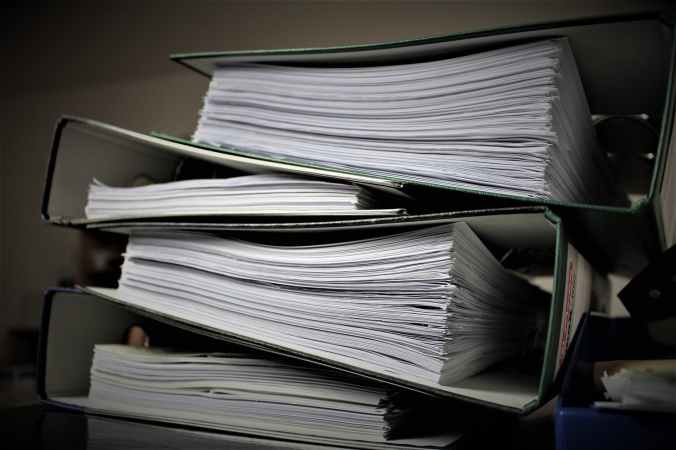
Whenever I begin a new project or start a new job, I always create an actual physical notebook. I print out all the emails, paperwork, presentations, and meeting notes. I then punch holes in them and put them in a nice binder.

The binder is divided with colored transparent plastic dividers, each labeled with a particular category such as E-mails or Meeting Notes. I then put a label down the spine of the binder, so I know exactly which project or job it is for.

So, in the world of the cloud, why do I still do this? Because I am a kinesthetic learner. I have found I learn best if I can hold printed materials in my hand. I like writing on them and highlighting important ideas. I know I can do that on my tablet or laptop, but it’s not as much fun as doing it all by hand.

By the time I have everything printed out, organized, read, and highlighted, I have a good handle on the project’s or job’s requirements. In addition, I’ve burnt up some of the nervous energy I always feel when I start something new and can now focus on the work I need to do instead of my anxiety.

Are you a notebook person? If not, how do you get organized for a new job or project? What helps you deal with that initial burst of anxiety that frequently accompanies a new project or job?

Every Continent Except Antarctica :)

When I began teaching at Future Envision, I realized I have now taught students on every continent except Antarctica. I’m proud of that, yet humbled. It utterly amazes me to think that I get to be a part of my students’ educational journeys in so many different countries.

When I first decided to be an English teacher back in high school, I had no idea that one day I’d be sitting in my office in Florida, instructing students in Africa, Asia, Europe, North America, and South America.

I’ll always remember one student I had onsite who was originally from the Philippines. He always had a willing smile and loved sharing his food with you. I didn’t realize how much we had in common, however, until I had the students compose an essay one night about their dream home. He wrote about a beautiful farm he one day hoped to have in the Philippines. As I read his description, he could have been describing my dream farm that I’ve always wanted here in Florida. We grew up oceans apart, yet we shared the same love of the land and desire to grow our own food.

Now that I’m teaching students from Singapore online, I find myself learning increasingly about their lovely country. But I was surprised by how much they enjoyed listening to me share stories of my Florida childhood in my southern accent. My rural childhood is vastly different from their decidedly urban ones, but we still share great love for our grandparents and a passion for learning.

The most unexpected question I’ve received from my students in SG is wanting to know how tall I am; when I told them I was 5’5″ tall (that’s 1.651 meters), they thought I was quite tall. Seeing each other on a Zoom screen makes it hard to see each other’s actual size. But our smiles seem to transmit quite accurately!

Microsoft Editor Vs. Grammarly

How did I not know about Microsoft Editor? I just recently learned Microsoft was now offering this addon for Chrome, so I decided to download it and try it out. If you’ve been following this blog, you know that I’ve been using Grammarly for over a year now and find it extremely helpful and easy to use.

Since most of my students use Microsoft Office, however, I wanted to try Editor. That way when they ask me which they should use, I can give them an informed answer.

Installing MS Editor was a bit annoying; I had to remember my Microsoft Account login, which is not something I use everyday. I’m very thankful for my Google Password Manager, so I don’t have to keep up with those, too.

Of course, to sign into my Microsoft account I had to use the authenticator app on my phone. That is annoying – just an extra step I don’t have time or patience for.

Installing was super easy, though. Inviting videos made me a little more eager to try the product. The process was quick and straightforward once I had logged into my Microsoft account.

Would it show up automatically on my Microsoft Word? To see, I opened a recent cover letter I’d written. Microsoft Editor and Grammarly both showed up in the banner menu. I clicked on Editor and very quickly received an Editor Report giving me corrections, refinements, and an editor score. Corrections were easy to see and make.

It wasn’t as colorful as the Grammarly report I receive, and the explanations for the suggested corrections were not as detailed or clear as those on Grammarly. But for me, it worked quickly and well.

So, which would I recommend to my students? If you are a beginning academic English writer, I’d suggest Grammarly. It’s much less intimidating, more approachable, and gives more detailed explanations for the suggestions made.

If you are an experienced academic English writer, however, I’d recommend Microsoft Editor. It’s faster and gets to the point more quickly. It feels remarkably similar to the editor built-in to Microsoft Word.

My only caveat would be to be sure you go in and select whether you want your information shared with Microsoft. While some reviewers had difficulty turning it off, Microsoft has since updated and repaired this issue and it worked great for me.

I don’t need no grammar help! ;)

When I started working at my last position, one of my trainers recommended we install the Grammarly app. As an English major and experienced English professor, I thought, “Why should I use grammarly? I can proofread my own work just fine.”

A few days later, however, everything else this wonderful trainer had shared with me proved so beneficial I decided to give Grammarly a try. After all, it was free. What did I have to lose?

It only took one day of using Grammarly to become absolutely impressed. I loved how it made suggestions not only for grammatical errors but for other issues such as clarity and coherience. I also enjoyed seeing this app pop up on my online classroom posts and even my social media jottings.

I’ve been recommending it to all of my students ever since. I mentioned it recently to a new ESL class and found many were already using this great app.

When you are the writer, it is incredibly easy to overlook simple grammatical mistakes because your brain automatically fills them in for you. Grammarly takes care of that issue for you.

I was also impressed that, unlike the editor built into the word processing software I use, Grammarly caught word usage errors – such as using “red” for “read”.

And yes, I know that there is a grammatical error in the title – got your attention, didn’t it? And yes, my Grammarly app did catch the mistake.

If you haven’t tried Grammarly, give it a shot and let me know what you think in the comments section below. And if you have tried it, feel free to share what you like about this amazing tool.